
This page last revised 30 August 2006 -- S.M.Gon III
Introduction
Ecoregion
Conservation Targets
Viability
Goals
Portfolio
TNC Action Sites
Threats
Strategies
Acknowledgements
▫
Tables
Maps & Figures
CPT Database
Appendices
Glossary
Sources
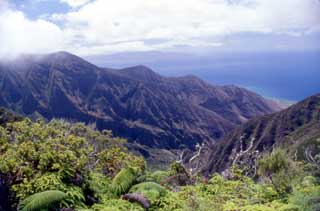
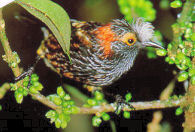
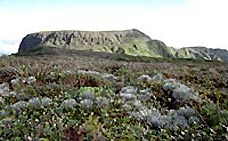
The silverswords of the West Maui bogs flourish near Eke crater.
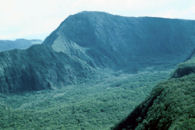
Portions of the East Maui Watershed have been rendered ungulate-free, and show significant recovery of native vegetation.
Appendix:
Maui Strategies
1998 ERP Strategic Summary
The 1998 ERP summarized strategies for thespecific needs of each ofthe conservation areas defined by the large native landscapes ofeach major island. The directives established then have largely beenrealized and continue to evolve. In 1998, the Maui Program, along with Moloka‘i themost mature in the state, was comprised of three preserves (Waikamoi, Kapunakea, and Maui Lava Tubes). The ERP recommended thefollowing for Maui::
- Our expectation is that a West MauiWatershed Partnership will be established which will match the effectiveness ofthe East Maui partnership in pooling expertise and fundraising to generatemajor new stewardship impact and political support on the island.
- The
- The island-wide, multi-agencyprogram to prevent new pests from arriving via traveler education and improvedquarantine inspections, and to detect and contain or eradicate new infestationsbefore they become widespread is an essential strategy, and a model for thestate.
- TNC believes

2006 Strategic Update
By the end of 2005, both The East Maui Watershed Partnership (est. 1991) and West Maui Mountains Watershed Partnership (est. 1998) were implementing their management plans, which calls for major fencing andungulate control projects according to management planning priorities. The Leeward Haleakalā Watershed Restoration Partnership (2003) was formed, expanding conservation and restoration efforts to the leeward native areas of the East Maui Conservation Area.
In 2002 the Maui InvasiveSpecies Committee (MISC),grew out of the Maui-based Melastome Action Committee, to dealwith prevention and early treatment of incipient pest species (such as Miconia). A close relationship of MISC staffwith the TNC Maui Office has maximized alignment of our alienspecies prevention goals and actions.
The Maui Program continues to manage Kapunakea Preserve (1,264 acres) as part of the West Maui Conservation Area, Waikamoi Preserve(5,230 acres) in East Maui (Haleakalā), and The Maui Lava Tube Preserve(location and other details protected) in addition to being activeparticipants in the partnerships described above.
Largely through the watershed partnerships, our efforts onMaui have resulted in some of the largest strides toward renderinglarge areas ungulate-free. Current plans are to pursue this leadershipfurther, rendering new regions ungulate-free and exploring moreeffective ungulate control and preventation measures on Maui.
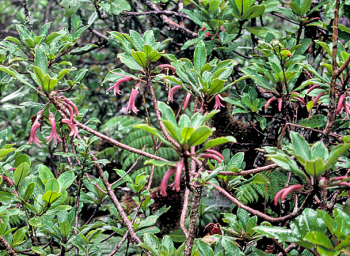
Clermontia samuelii is an endemic Hawaiian lobelioid from the Montane Wet Ecological System; Hāna District, East Maui Conservation Area.
